What It Takes to Renovate a Home
A complete guide for homeowners — on planning, budgeting, sequencing, and the small decisions that decide whether a renovation feels finished or merely done.

Renovating a home is more than changing tiles, painting walls, or replacing furniture. A successful renovation requires planning, budgeting, design decisions, material selection, skilled execution, and careful coordination.
Whether you're renovating a single room or transforming your entire home, understanding the process before starting can save you time, money, and unnecessary stress.
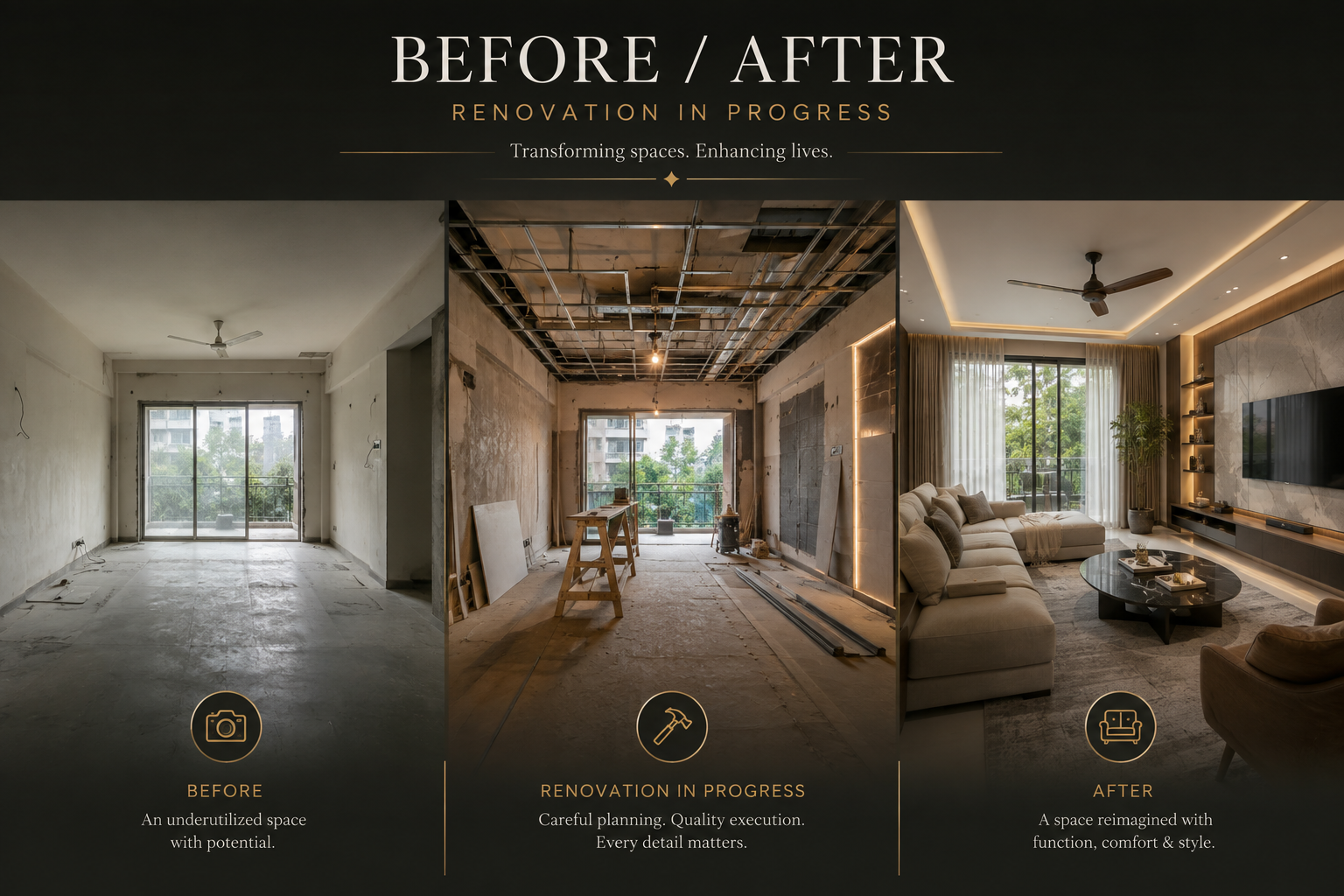
Start With a Clear Renovation Goal
Before removing anything, define why you are renovating. Are you looking to:
- Modernize an outdated home?
- Improve storage?
- Create a more functional kitchen?
- Upgrade lighting and electrical systems?
- Improve the overall appearance?
- Prepare the home for long-term living?
- Increase the property's value?
A clear objective helps determine the scope, budget, materials, and design direction.
Understand the Existing Space
Every renovation begins with understanding what already exists. A professional assessment should consider:
- Existing floor plans
- Structural elements
- Plumbing points
- Electrical wiring
- False ceiling conditions
- Doors and windows
- Flooring & wall conditions
- Kitchen and bathroom layouts
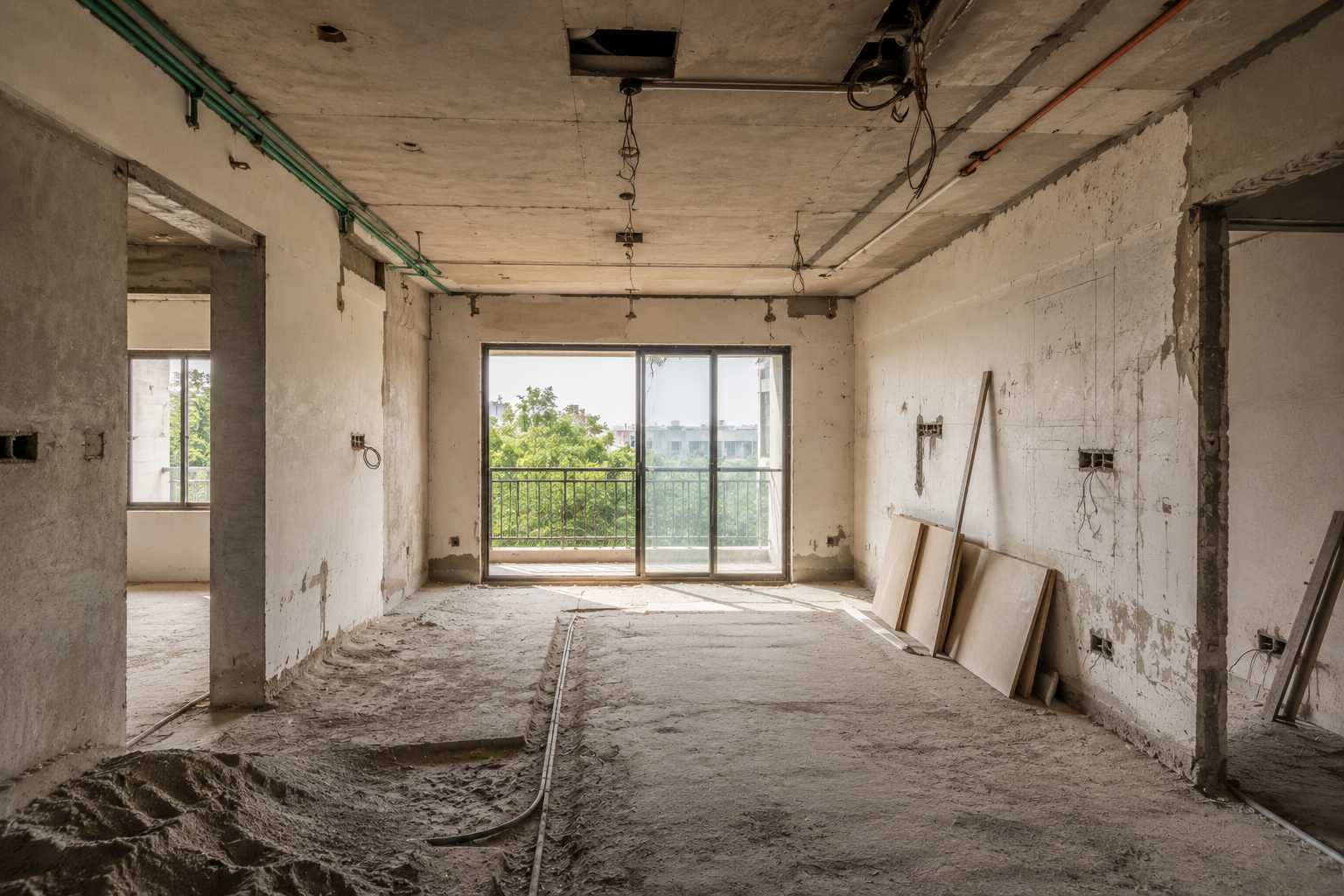
This stage helps identify what can be reused, what needs modification, and what needs complete replacement.

Set a Realistic Budget
Budgeting is one of the most important parts of renovation. Your budget may include:
It is also smart to keep a contingency amount for unexpected site conditions. Once old flooring or walls are opened, hidden plumbing, damaged wiring, or moisture issues may be discovered — a good renovation budget should have room for the unexpected.
Create the Design Before Starting Work
One of the biggest mistakes homeowners make is starting work before the design is finalized. A proper design should establish:
- Space planning & furniture layout
- Storage requirements
- Material palette & colour scheme
- Lighting positions & electrical points
- Ceiling design
- Kitchen layout & wardrobe design
- Bathroom finishes & decorative elements
The more decisions you finalize before execution, the fewer changes you'll face during construction.

Choose Materials Carefully
Materials can dramatically change both the appearance and lifespan of a renovation. Common choices include plywood, laminates, veneers, acrylic, glass, quartz, granite, tiles, natural stone, paint, wallpaper, metal, and wood finishes.
The right material isn't always the most expensive one. The goal is to select materials based on function, durability, maintenance, aesthetics, and budget.
Plan Electrical and Lighting Early
Electrical planning is often overlooked until it's too late. During renovation, think about switch locations, socket positions, appliance points, TV and data points, AC points, smart switches, and bedside charging points — alongside layered lighting: pendant, cove, profile, and cabinet lighting.
Lighting should be layered rather than relying on a single ceiling light. A combination of ambient, task, accent, and decorative lighting can completely transform a space.

Renovation Is a Sequence
Renovation work needs to happen in the right order. A typical sequence looks like:
Changing this sequence unnecessarily can create delays, damage completed work, and increase costs.
Site Coordination Matters
A renovation involves multiple teams — civil workers, electricians, plumbers, carpenters, painters, ceiling installers, glass and tile workers, lighting teams, and appliance installers. Someone needs to coordinate these teams and ensure every stage is completed correctly before the next one begins. This is where professional project management becomes extremely valuable.


A renovation is not a purchase. It is a process — one that rewards patience, planning, and the willingness to get the small things exactly right.
Expect Some Unexpected Problems
Even a well-planned renovation can reveal surprises — old or damaged wiring, plumbing leaks, uneven walls, moisture problems, weak surfaces, or hidden pipe routes. The key is not to panic when something unexpected appears. Instead, evaluate the problem, understand the available solutions, and make a controlled decision.
Quality Control Is Essential
A beautiful design can still fail because of poor execution. During the project, check cabinet alignment, door gaps, hardware quality, edge finishing, tile joints, paint finish, electrical installation, plumbing connections, lighting alignment, silicone finishing, and surface levels.
Small finishing details can make a huge difference to the final result.

Renovation Takes Time
A renovation isn't simply about how quickly work can be completed. Good work requires time for design, material selection, manufacturing, site preparation, installation, finishing, and inspection. A realistic timeline is much better than promising an unrealistic completion date.
The Final Result Is More Than Just a New Look
The best renovation isn't necessarily the one with the most expensive materials. It is the one where design, functionality, comfort, storage, lighting, materials, and execution work together.
A successful renovation should make your home more functional, more comfortable, more personal, more durable — and better suited to the way you actually live.
Final Thoughts
Renovating a home takes much more than a good design idea. It takes planning, technical knowledge, budgeting, material understanding, coordination, patience, and attention to detail.
When all these elements come together, renovation becomes more than simply updating a house — it becomes an opportunity to create a home that genuinely works for you.
Spaces with soul & structure
At Illume Interiors, we believe every renovation should balance aesthetics, functionality, and thoughtful design to create spaces that feel as good as they look.