Illume Journal · Materials & Design Decisions
The materials that hold up, and the ones that only look like they will.
A working guide to plywood grades, laminates, veneers, and stone — chosen for Bengaluru's climate, not a showroom under ideal light.
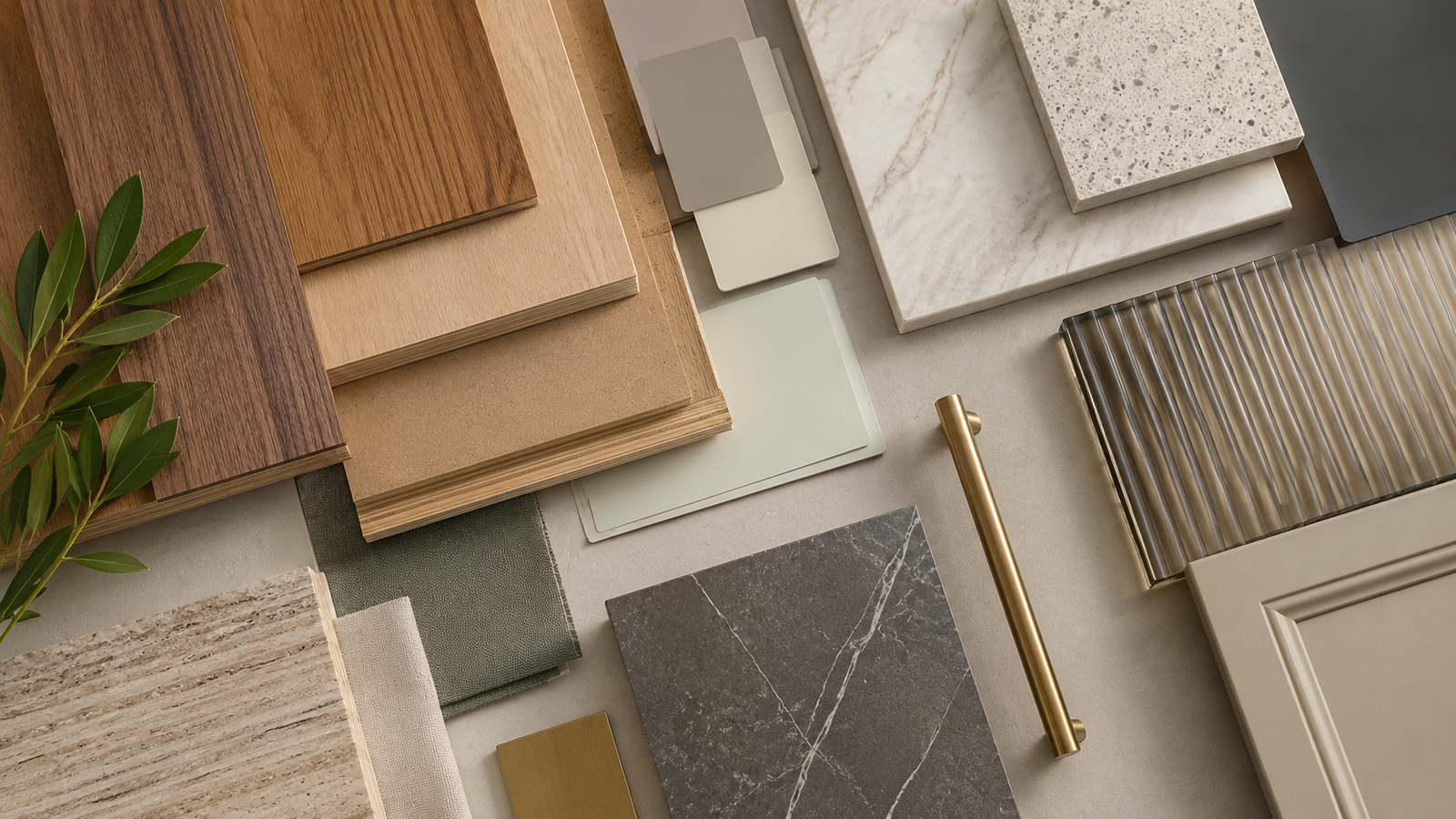 On site · Bengaluru
Interior Materials Guide: Where Bengaluru Homes Actually Fail First
Most interior mistakes aren't visible on handover day. A laminate finish, a plywood core, an edge band — they all look identical under showroom lighting. The difference shows up eighteen months later, in a swollen shutter, a lifted edge, or a countertop that's stained past saving. This interior materials guide is the material logic we actually use before a single drawing is finalized — what each material is, where it belongs, and where Bengaluru's climate quietly overrules the brochure.
Plywood Grades The Core Nobody Sees
Plywood grade is decided by the glue used to bind the veneer layers, not by thickness or the brand name printed on the edge. This single spec determines whether cabinetry survives a Bengaluru monsoon or a bathroom's daily humidity — and it's the detail most quotations leave vague.
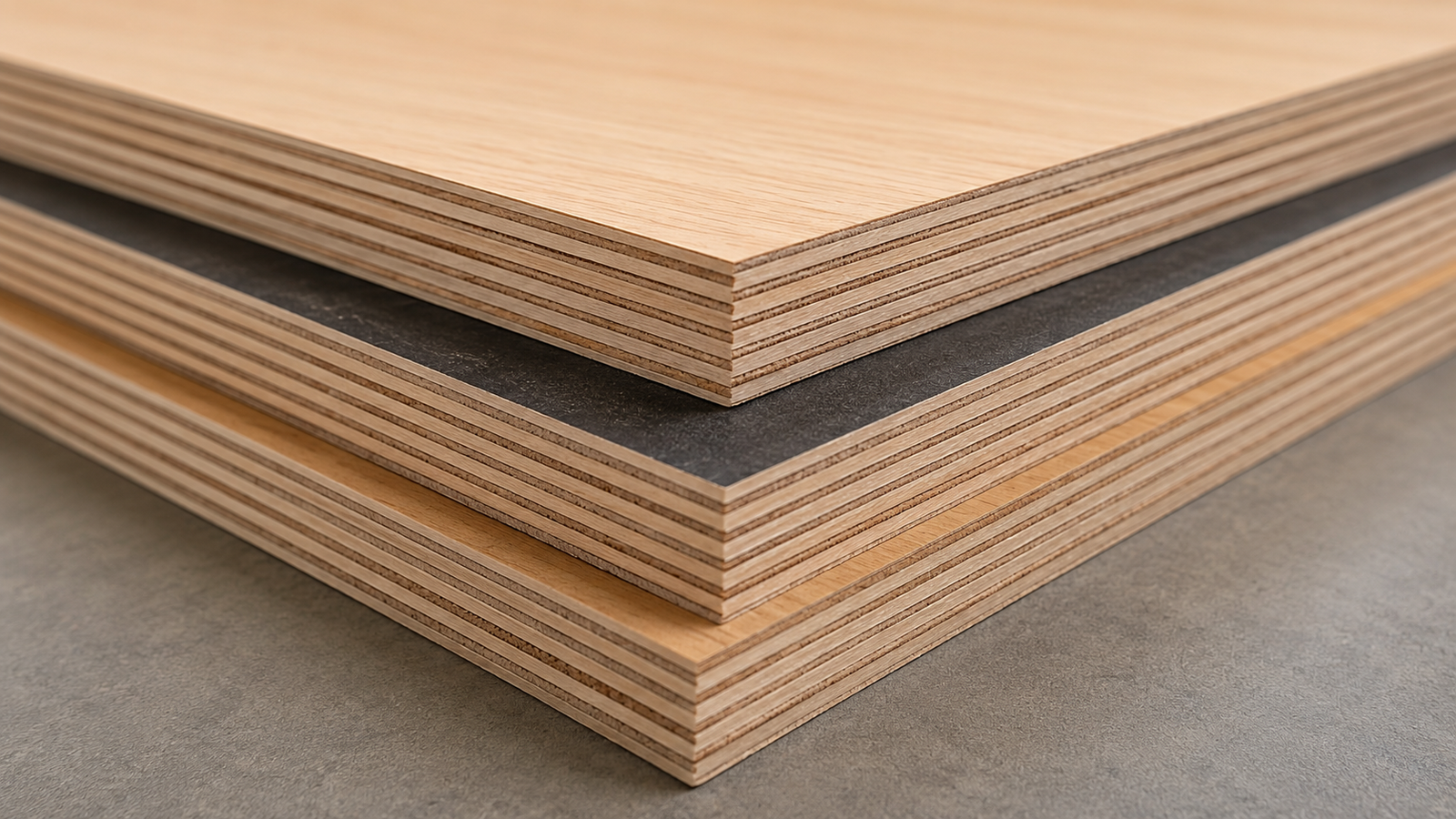 Ply edge, unsanded
MR Grade (Moisture Resistant)
Good for: Dry-area wardrobes, study units, low-humidity rooms. Avoid in: Kitchens, bathrooms, utility areas, ground floors near planters.
BWR Grade (Boiling Water Resistant)
Good for: Kitchen base units, wash areas, balconies-adjacent cabinetry — the sensible default for most Bengaluru homes.
BWP Grade (Boiling Water Proof / Marine)
Good for: Bathroom vanities, exteriors, homes near lakes or heavy tree cover with sustained damp air. Costs 20–30% more than BWR — worth it only where moisture exposure is constant, not occasional.
The grade written on a quotation and the grade actually delivered on site are not always the same thing. Ask for the ISI mark and the plant batch code — not just the invoice line.
Laminate, Veneer & Acrylic What Sits on Top
The core decides longevity; the finish decides how the piece behaves day to day — scratch resistance, fingerprint visibility, repairability. These three get confused constantly because they can look near-identical in a sample book.
Laminate
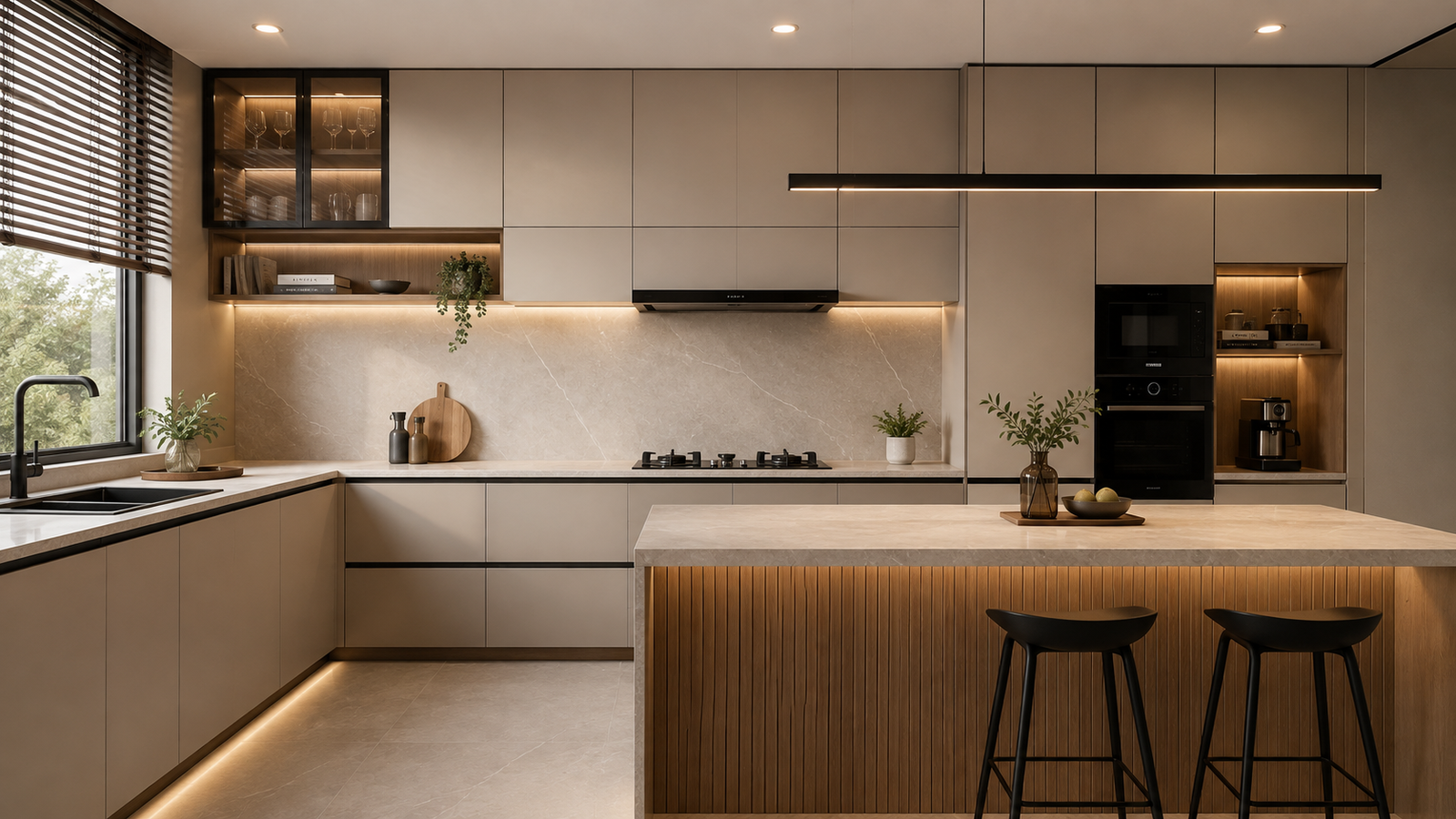
A pressed paper-resin sheet bonded to the board. Durable, wide color range, most repairable if damaged — a chipped edge can be patched without redoing the whole panel. The practical choice for high-traffic units like kitchen shutters and wardrobe exteriors.
Veneer
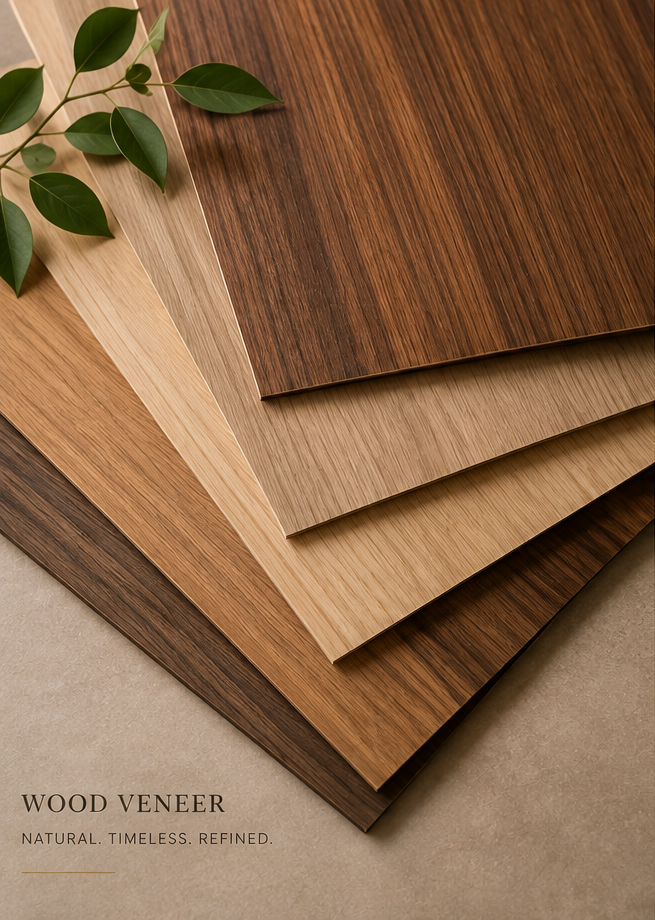
Real wood sliced thin and bonded to the board — grain and warmth no printed surface replicates. Needs more careful handling: avoid direct sun exposure and standing water, and expect periodic polishing. Best reserved for feature panels and furniture rather than daily-use kitchen shutters.
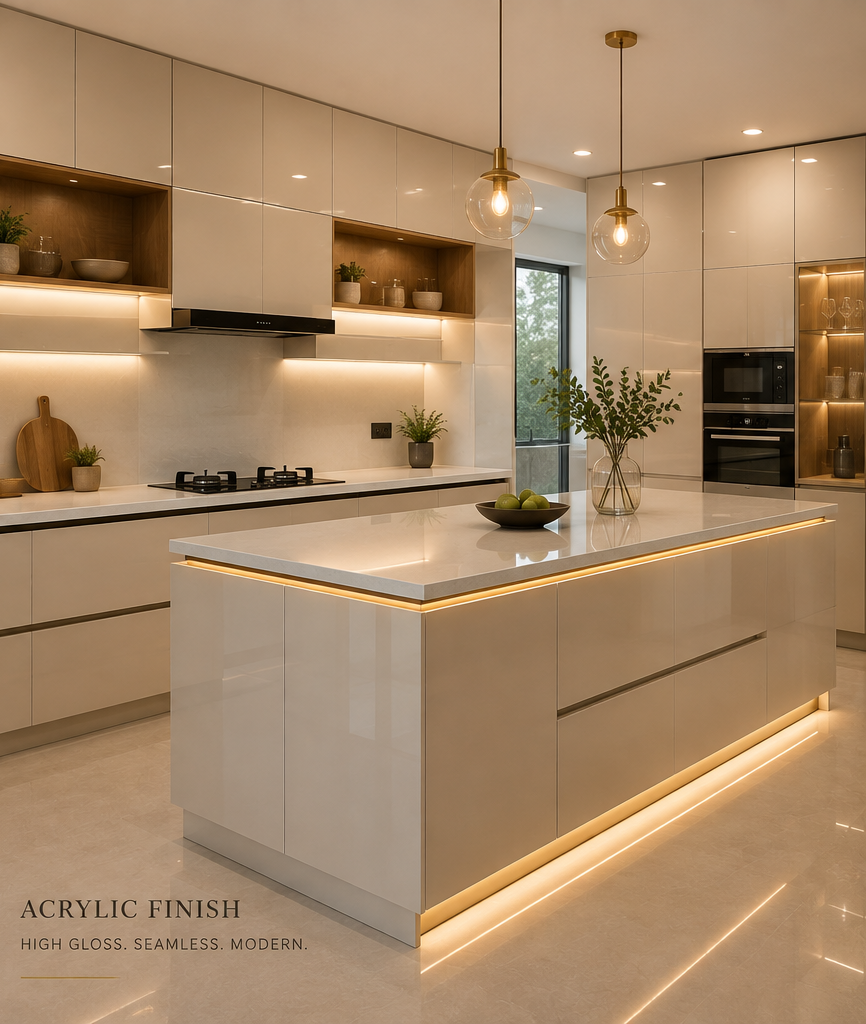
Acrylic / High-Gloss PU
A mirror-like, seamless finish that reads as premium in photographs. Shows fingerprints and micro-scratches faster than laminate, and a damaged panel usually needs full replacement rather than a spot repair. Choose it deliberately for a specific visual effect — not as a default upgrade.
Countertops & Surfaces Engineered vs Natural Stone
Natural stone reads as luxury; engineered stone often performs better in an actual kitchen. Neither is universally correct — the decision depends on how the surface will really be used, not how it photographs.
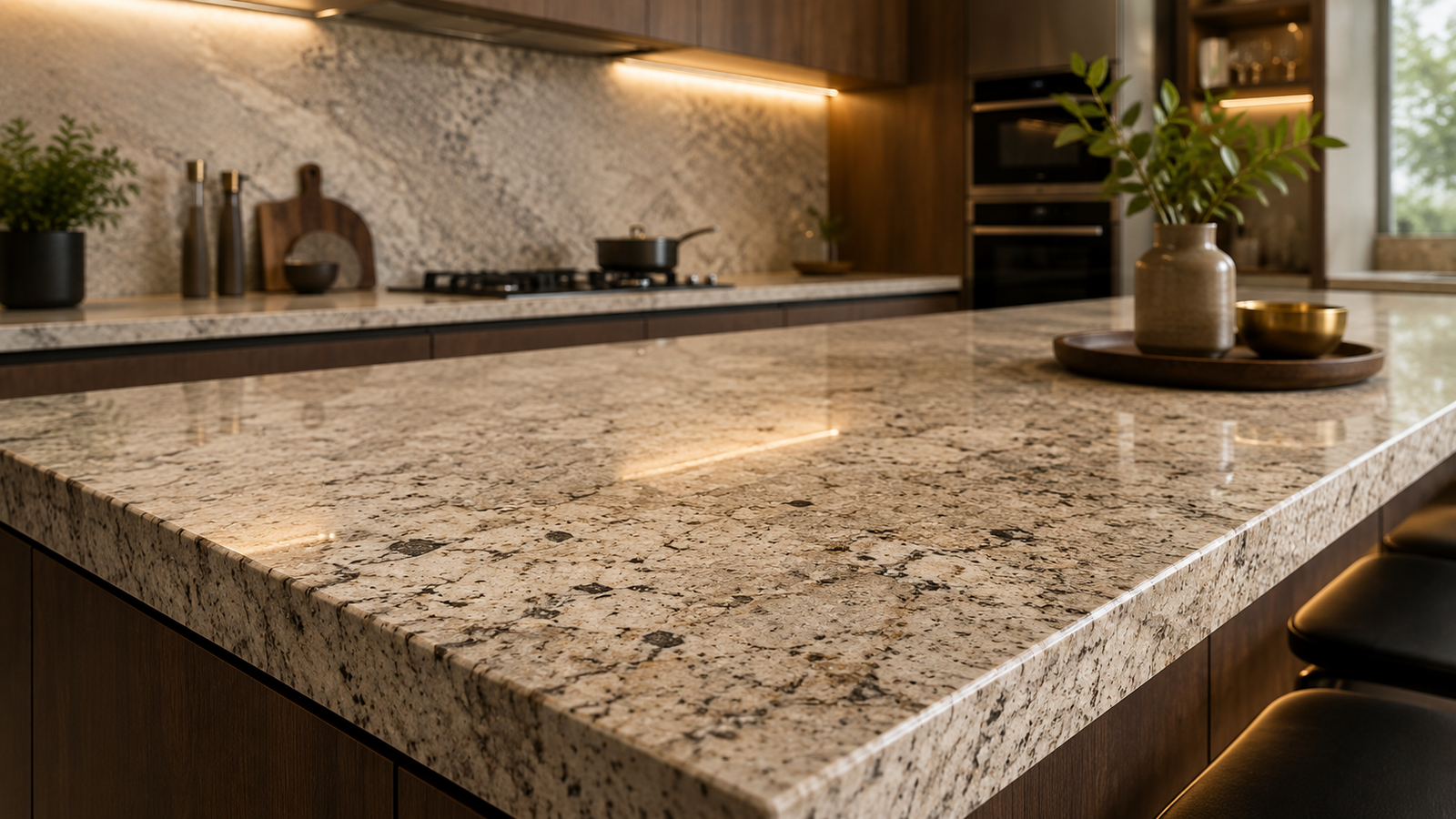 Granite, unsealed
| Factor | Engineered Quartz | Natural Granite |
|---|---|---|
| Porosity | Near non-porous, minimal sealing needed | Porous — needs periodic sealing, especially in humid months |
| Stain resistance | High — resists turmeric, oil, acidic spills | Moderate — depends on stone type and seal condition |
| Heat tolerance | Moderate — trivets recommended | High — tolerates direct hot cookware better |
| Pattern | Consistent, repeatable across slabs | Unique per slab, natural veining |
| Typical cost | Mid-to-high | Wide range — budget to ultra-premium |
For most Bengaluru kitchens with daily cooking, engineered quartz's stain and seal-free convenience outweighs the appeal of natural veining. Granite still earns its place in low-use islands, bar counters, or where a specific stone's character is the design's whole point.
Hardware & Edge Detailing The Part That Fails First
Cabinet failures rarely start with the board — they start with the hinge, the channel, or the edge band. These are the components worth spending on even when the budget is tight elsewhere, because replacing hardware later means dismantling finished carpentry.
- Hinges & channels — soft-close mechanisms from established hardware brands hold their action for years; unbranded equivalents sag within 12–18 months of daily use.
- Edge banding — a 2mm PVC edge outlasts a 0.5mm tape edge by years, particularly on high-contact edges like drawer fronts and countertop-adjacent panels.
- Handleless systems — visually cleaner, but the aluminum profile quality determines whether the reveal stays crisp or the finger-pull edge chips within a year.
Before You Approve a Material List
Keep this interior materials guide handy — five questions worth asking any designer or contractor, including us:
- What plywood grade is specified for each room, not just "the kitchen"?
- Is the finish (laminate/veneer/acrylic) matched to how that surface will actually be touched and cleaned?
- Is the edge banding thickness stated in millimeters, not just "PVC edge"?
- Is hardware specified by brand and series — or left as "branded hardware" to be decided later?
- Does the countertop choice account for daily cooking habits, not just the showroom sample?
Common Questions
No — it's a premium spent where it matters. BWR handles most kitchen and semi-wet areas well; reserve BWP for bathroom vanities and spaces with sustained damp exposure.
Not inherently — matte and textured laminates now closely mimic stone, fabric, and wood-grain finishes. The gap in perceived luxury has narrowed; the real difference is in maintenance behavior, not appearance.
Only if you're prepared to reseal it periodically and you value its unique veining over convenience. For daily, high-use cooking, engineered quartz is generally the lower-maintenance choice.
Materials & Design Decisions
Every material we specify, explained before it's ordered.
We walk every client through the exact grade, finish, and hardware behind their quotation — no vague line items.

Rất cảm ơn những chia sẻ này. Nếu cần tư vấn du học Hàn Quốc, hãy tìm đến Letco — kinh nghiệm nhiều năm, dịch vụ uy tín. Chi tiết tại letco.vn.